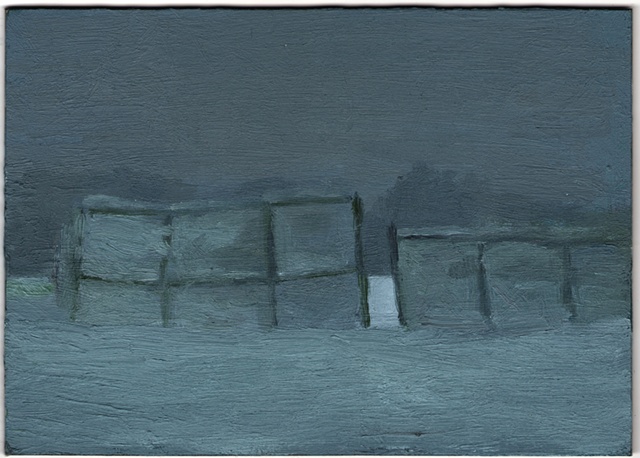
Vail Field
2011
Oil on Panel
5 x 7"
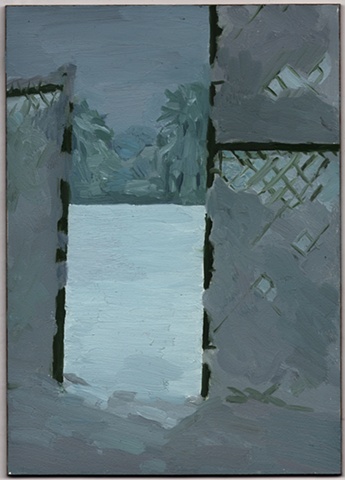
Opening
2011
Oil on Panel
7 x 5"
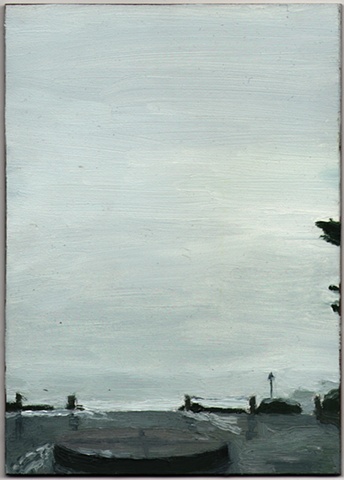
Lookout
2012
Oil on Panel
7 x 5"
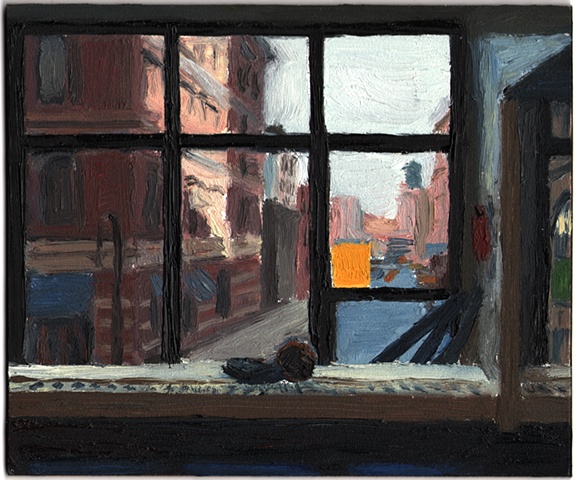
Bond Street
2012
Oil on panel
5 x 6"
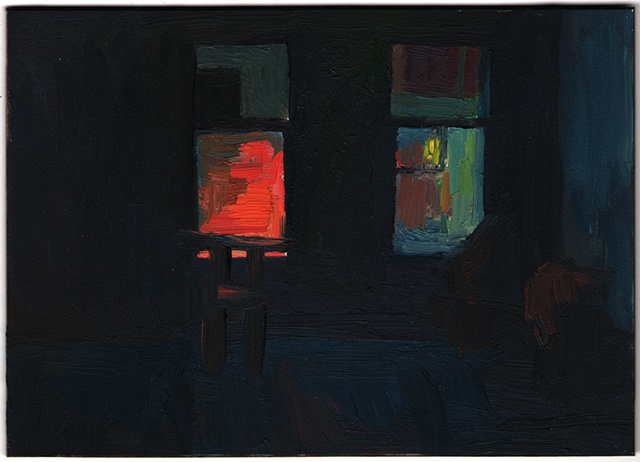
Police Lights
2011
Oil on Panel
5 x 7"
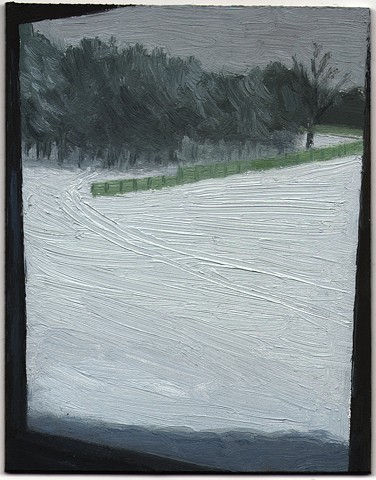
Icy Window
2012
Oil on Panel
5 x 3 15/16"
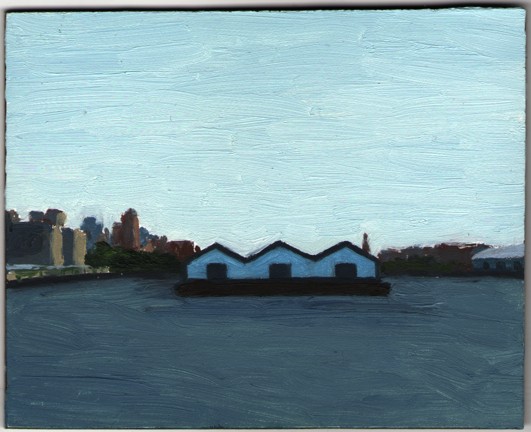
Waterfront Warehouses
2012
Oil on Panel
4 x 4 7/8"
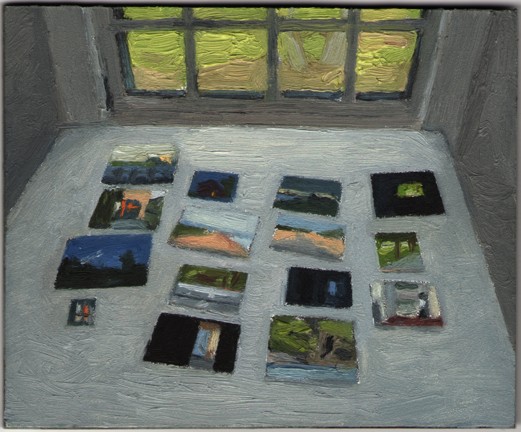
Paintings on the Drafting Table
2012
Oil on Panel
4 x 4 7/8"
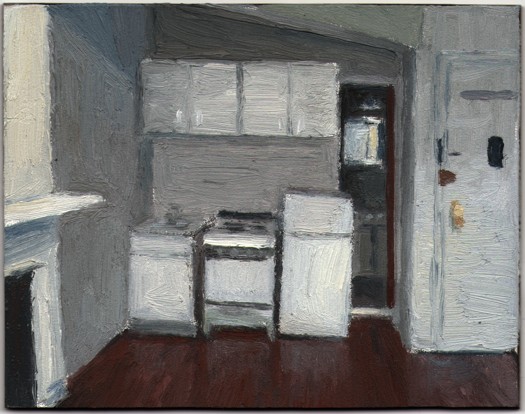
Apartment 16
2012
Oil on Panel
3 7/8 x 5"
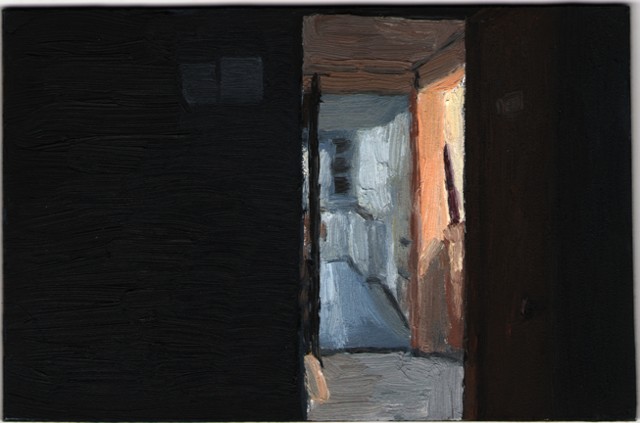
Into the Studio
2012
Oil on Panel
3 15/16 x 6 1/16"
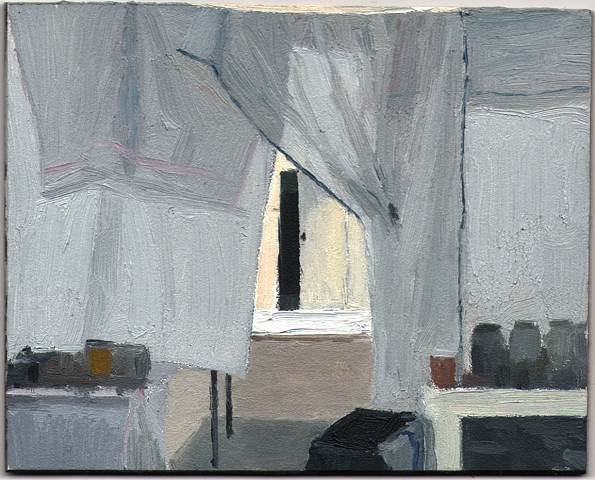
Charlotte's Studio with Sheets
2013
Oil on Panel
4 x 4 15/16"
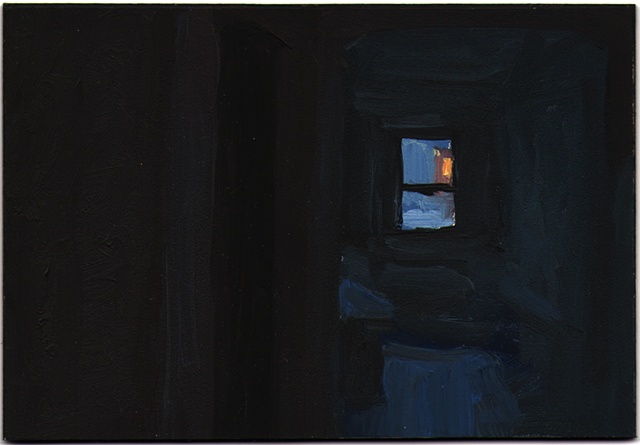
Studio Evening
2012
Oil on Panel
3 1/2 x 5"
These paintings remind me of so many things I like-- Fairfield Porter, Avigdor Arikha, and a New England college (in the 1980s, for some reason). Their size makes them charming, and I enjoy the thickness of the brushwork as it relates to the size of the panel, as well as the ordinaryness of the images. The best ones, for me, combine that ordinaryness with something a bit strange. The artist is very young, and went to Amherst then New York Studio School. I found out about her from Jerry Saltz's article on his ten best shows of the year.
"Windows and doorways organize so much of what we see, especially in cities. I enjoy watching a familiar view change over time in relation to the constant of the window. Often the things outside seem to relate to the window's shape, or the grid of its panes, in the way that the interior of a painting relates to its own edges. In paintings, windows and obscured views have a sense of frozen expectation -- of something forever about to happen, or about to be revealed. The frame of a window or doorway takes on a clear relationship to the painting's flat surface. And it can have a figurative presence that remains anonymous but not totally impartial."

No comments:
Post a Comment